What 82 mg Across Five Botanicals Actually Means
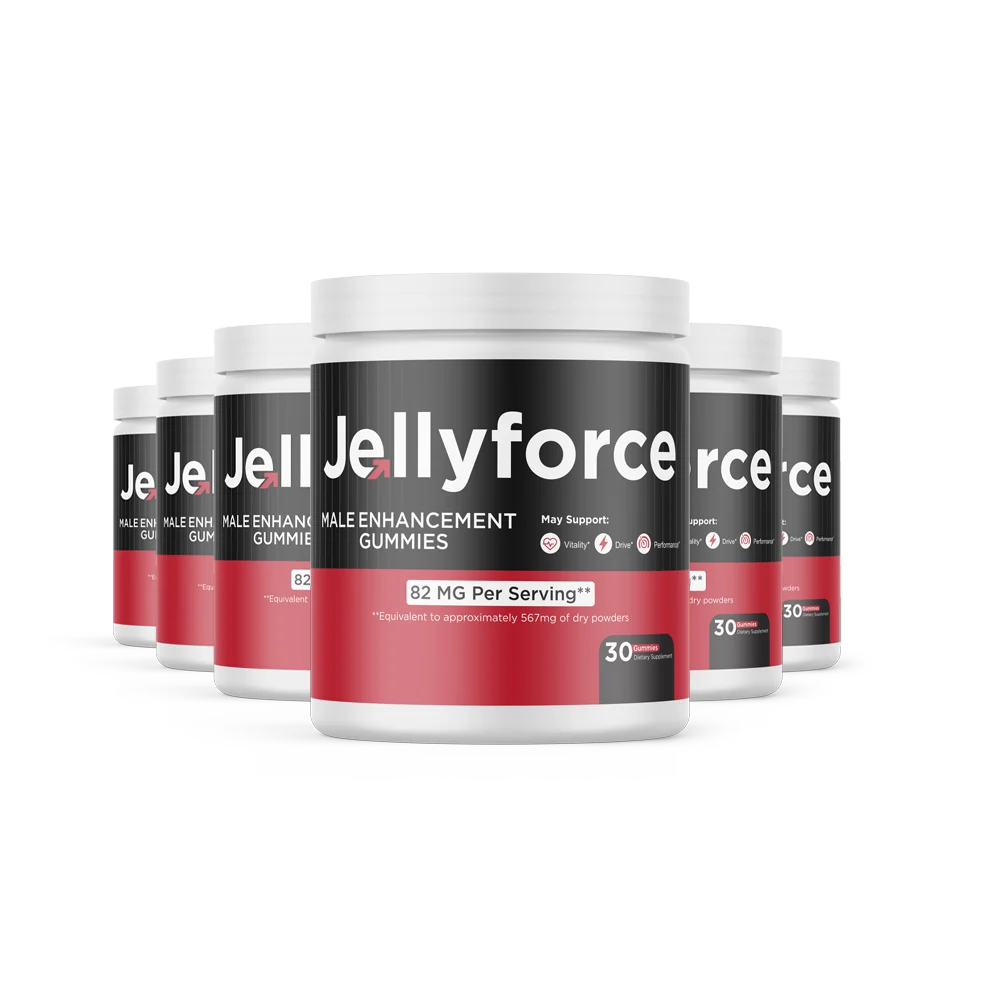
The front of the Jelly Force bottle carries a figure most competitors leave off entirely: 82 mg per serving, with a footnote saying that is equivalent to approximately 567 mg of dry powders. Here is how to get value out of it.
First, what it is not
It is not 82 mg of each ingredient. It is the total across all five. This is the single most common misreading of a blend label, and it matters enormously: 82 mg each would be 410 mg of actives, five times what is actually there.
The ceiling principle
A published total gives you a hard upper bound. No ingredient can exceed 82 mg, and since five are named, the average is around 16 mg. Real blends are rarely even — a formulator typically loads one or two ingredients and lists the rest at token weights — so the practical reading is that one ingredient might reach 40 or 50 mg and the others sit well below 20 mg.
You cannot tell which from a total. But you can rule things out, and ruling things out is most of what dose literacy consists of.
What the 567 mg footnote adds
An extract is concentrated plant material. If 82 mg of extract is stated as equivalent to about 567 mg of dry herb, the ratio is roughly 7:1 — seven parts raw material reduced to one part extract. That is a normal, respectable range for a botanical extract, and it means the 82 mg represents more plant than its weight suggests.
It also means the honest comparison is not "82 mg versus the study dose". It is "567 mg of herb-equivalent versus the study dose", which is a more generous and more accurate framing.
Running the comparison
Adaptogens. Standardised ashwagandha extract is commonly studied in the low hundreds of milligrams per day. A share of 567 mg herb-equivalent is below that but not absurdly so, especially at extract strength. Plausible-but-modest is the fair verdict.
Traditional botanicals. Muira puama and catuaba have thin modern dose literature, which cuts both ways: nothing here is clearly underdosed, because there is no agreed dose to be under.
Amino acids. This is where the arithmetic bites. L-arginine research on blood flow uses grams — typically several. A gram is 1,000 mg. The entire serving is 82 mg. No division of that total gets L-arginine into the range where the nitric-oxide mechanism has been demonstrated. That is not a criticism of the mechanism, which is real; it is a statement about the vehicle. Amino acids do not fit in a gummy at clinical doses, and no gummy on the market solves that.
Why a company would publish this at all
Worth noting, because it is easy to be cynical. A manufacturer that prints 82 mg on the front of the bottle knows a reader can do the sum above. Leaving the number off entirely — which is legal, common, and what most of the category does — would have been the easier commercial choice.
The practical takeaway
Judge this formula on its adaptogen and botanical content and on the daily habit it represents. Do not buy it for the arginine. And when you next pick up a supplement with no numbers at all, remember that you could not have done any of this analysis on it.
See the current Jelly Force price
Official store pricing, free US shipping on 3 and 6 bottles, 60-day money-back guarantee.
Order NowFrequently asked questions
Is 82 mg the dose of each ingredient?
No. It is the total across all five named ingredients. Dividing it, the average is around 16 mg each, though real blends are rarely evenly split.
What does 'equivalent to 567 mg of dry powders' mean?
It means the 82 mg is concentrated extract rather than raw herb, at a ratio of roughly 7:1. The extract stands in for that much plant material.
Is the L-arginine in this useful?
At this serving size, no — clinical arginine research uses grams and the whole serving is 82 mg. That is a limitation of the gummy format rather than of this product specifically.
Does the label give a per-ingredient breakdown?
No, and we will not invent one. The total is published; the split is not.