Gut Health Supplements After Antibiotics: An Evidence Check on Timing
Quick answer
Gut health supplements after antibiotics have the most support for one narrow job: lowering the chance of the loose stools that often accompany a course, when the supplement is started early and taken alongside the drug rather than after it. For the bigger promise — rebuilding a microbiome once the course has finished — the human evidence is thin, and one closely watched study found that a supplement slowed the return of a person's own native bacteria rather than speeding it up.
- The window that was studied: started within roughly two days of the first antibiotic dose, continued through the course and for a short period after.
- Most-tested options: Saccharomyces boulardii, which is a yeast and therefore untouched by antibacterial drugs, and Lactobacillus rhamnosus GG.
- Not established: that any product restores diversity faster than time, ordinary food and fibre do on their own.
Almost everyone leaves the pharmacy with the same folk instruction attached to the paper bag: take something for your gut. It is one of the few pieces of supplement advice that circulates by word of mouth rather than by advertising, and it is not baseless. It is also much narrower, once you read the trials, than the shelf of products built on top of it.
This is a walk through what the human research on gut health supplements after antibiotics has actually measured, which questions it answered, and which ones it left wide open. No product claims, no cures, and no invented numbers — where the evidence is weak we will say so, because a thin literature stated plainly is more useful than a thick one implied.
What a course of antibiotics actually does down there
An antibiotic does not distinguish between the organism making you ill and the several hundred species that live in your colon doing unglamorous but necessary work: fermenting fibre you cannot digest, producing short-chain fatty acids that feed the cells of the colon wall, competing for space against organisms you would rather not host, and helping train the local immune tissue.
Sequencing studies that sample people repeatedly through and after a course tend to show the same shape of event. Diversity drops during treatment, sometimes sharply. Then it climbs back, mostly within weeks, with the tail of the recovery running longer — some species return slowly, a few do not appear to return at all, and the more courses a person has had, the more the pattern accumulates. Broad-spectrum drugs disturb more than narrow ones. Longer courses disturb more than short ones.
Two consequences follow, and only one of them gets sold to you. The first is short-term and practical: with fewer competing organisms and less fibre fermentation, stools loosen. That is the most common side effect of oral antibiotics, and it is the outcome most of the supplement research was designed around. The second is longer-term and much harder to measure: the community composition shifts, and what that means for a specific healthy adult over years is genuinely unsettled science.
Gut health supplements after antibiotics: what the trials measured
Here is the point most articles skip. When researchers test gut health supplements after antibiotics, the outcome they record is almost never "the microbiome was restored". It is usually something far more concrete and far easier to count: did fewer people in this group get diarrhoea during the course?
That is a reasonable endpoint. It is also a completely different question from the one the marketing answers. A product can have decent evidence for reducing a side effect during treatment and no evidence at all for anything that happens in the six weeks afterwards, which is precisely when most people start taking it.
The Cochrane group has appraised this literature in children and judged the evidence for reducing antibiotic-associated diarrhoea to be moderate certainty, with the effect concentrated in the higher-dose trials. In adults the picture is less tidy. Pooled analyses of prevention of Clostridioides difficile associated diarrhoea have suggested a benefit, but one of the largest trials ever run in this setting — several thousand older hospital inpatients given a multi-strain preparation — found no reduction in either antibiotic-associated diarrhoea or C. difficile diarrhoea. When a single large, well-conducted trial disagrees with a pile of small ones, the honest position is that the effect, if it exists, is smaller and more conditional than the small trials suggested.
Professional guidance reflects that ambivalence. The American Gastroenterological Association's clinical practice guideline on probiotics found the evidence insufficient to recommend them for most digestive complaints, while treating prevention of C. difficile in people taking antibiotics as one of the few contexts where a conditional recommendation could be made at all. Reading a guideline that says "we cannot tell you" is deflating. It is also the most accurate summary available.
The strains and doses that were actually tested
Genus, species, strain. A label that says only Lactobacillus has told you roughly as much as a car advert that says "engine". The research is strain-specific, and results from one strain do not transfer to another that shares the first two names.
| What was tested | Form and dose used in studies | Setting | Strength of evidence |
|---|---|---|---|
| Saccharomyces boulardii | Yeast, capsules or sachets, typically a few hundred milligrams once or twice daily | Given alongside the antibiotic course | Among the better-studied options; a yeast, so antibacterials do not act on it |
| Lactobacillus rhamnosus GG | Live bacteria, billions of colony-forming units per day | Mostly children on antibiotics | Moderate certainty for reducing antibiotic-associated diarrhoea in that group |
| Multi-strain Lactobacillus and Bifidobacterium blends | Live bacteria, capsule or sachet, dose varies enormously between products | Older hospital inpatients | Mixed. One of the largest trials in this population found no benefit |
| Prebiotic fibres such as inulin or galacto-oligosaccharides | Powder, grams per day | Healthy adults | Indirect. Feeds organisms already present rather than adding new ones |
| Fermented foods | Food, not a measured dose | Healthy adults | Early. One small randomised feeding study is the most cited work |
| Taking nothing | No dose | Everyone | The comparison arm most products would prefer you forgot about |
Two practical notes on that table. Colony-forming units are counted at manufacture on some labels and at end of shelf life on others, and only the second number tells you what you will swallow. And a blend of eight species at an undisclosed split is not eight times the evidence of one well-studied strain at a stated dose — it is usually less, because nothing in the blend has been tested as the blend.
Timing: during the course, after it, or two hours apart?
Timing is where the practical advice diverges most sharply from what people actually do. The trials that reported a benefit did not wait. Supplements were typically started within about forty-eight hours of the first antibiotic dose and continued through the course, then for a further week or two afterwards. Starting the day the antibiotics finish — which is when most people buy something — is outside the protocol that generated the evidence.
The two-hour spacing rule is mechanistic rather than proven. If you swallow live bacteria at the same moment as a drug designed to kill bacteria, some proportion will not survive the encounter, so separating the doses is sensible. Whether that spacing changes any outcome a person would notice has not been established in a way worth quoting. It costs nothing to do, so most clinicians suggest it.
Duration after the course is similarly unsettled. Protocols commonly ran one to two weeks past the last antibiotic dose. That is a convention borrowed from trial design, not a biological finding, and there is no evidence that three months of daily capsules achieves more than two weeks.
A probiotic is not a multivitamin for bacteria. It is a named organism, at a stated dose, tested against a specific outcome — and the outcome that was tested is almost never the one printed on the front of the box.
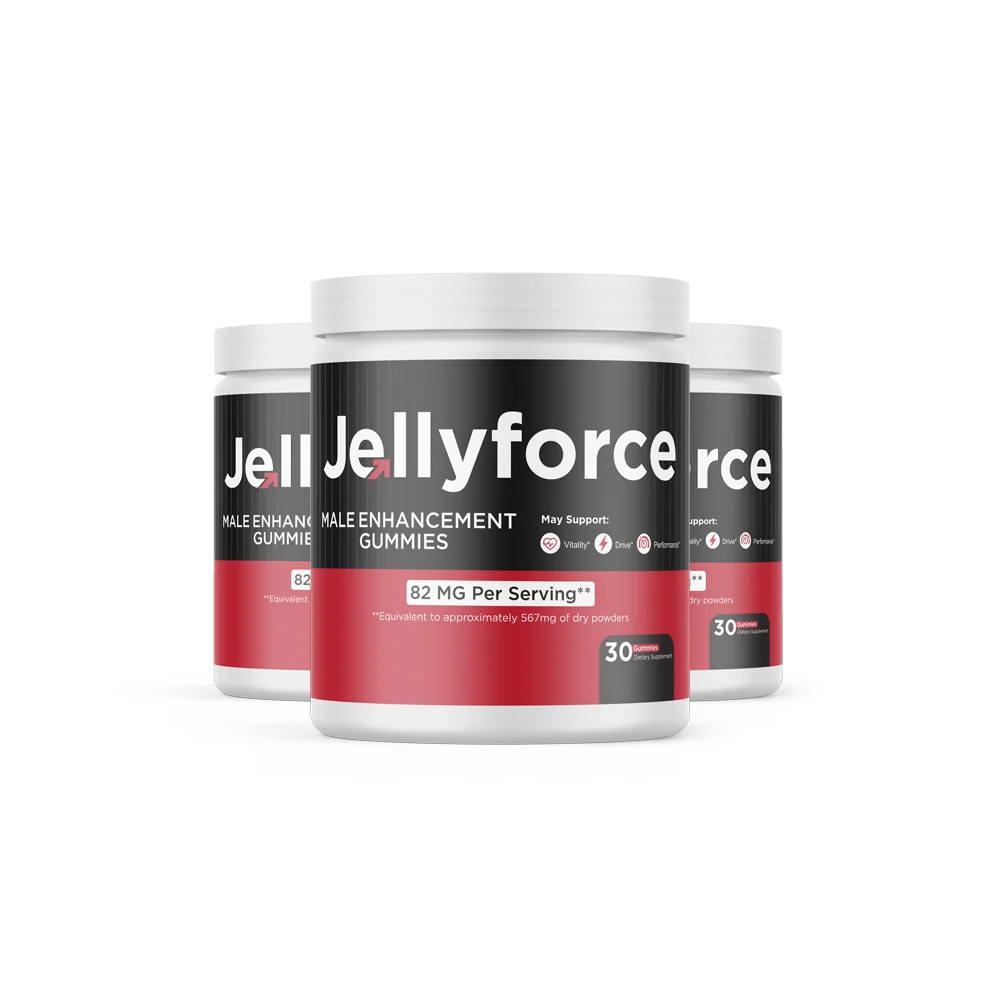
See the current Jelly Force offer
Official store pricing, free US shipping on 3 and 6 bottles, 60-day money-back guarantee. Jelly Force is a botanical vitality gummy, not a probiotic.
Get OfferThe counter-evidence that rarely makes the label
In 2018 a research group in Israel did something unusual: instead of asking people how they felt, they took endoscopic samples along the length of the gut to see whether supplemented organisms had colonised at all. Two findings came out of that work and both are inconvenient for the category.
The first is that colonisation is person-specific. In some participants the supplemented strains took up residence in the mucosa; in others the gut resisted them entirely and the organisms passed straight through, even though stool testing suggested they were present. Stool is what leaves you, not what lives in you.
The second is stranger. Among participants who had taken antibiotics, the group given a probiotic took longer to return to their original microbial composition than the group left to recover on its own. Reintroducing a person's own stored bacteria was fastest of all. The samples were small — this was a detailed mechanistic study rather than a large outcome trial — and it has not been replicated at scale, so it should not be read as proof that supplements are harmful. It should be read as evidence that "more bacteria must be better" is an assumption, not a finding.
That is the sort of result that changes how you shop. If you are searching for the best gut health supplement after antibiotics, the useful question is not which product has the most species on the panel. It is which named strain was tested for the outcome you personally care about, and whether that outcome is one you are currently at risk of.
What gut health supplements after antibiotics cannot do
This section exists because the category rarely writes one.
They cannot treat, cure or prevent an infection, and nothing sold as a dietary supplement may claim to. They cannot replace the antibiotic, shorten it, or make it safe to stop early. They cannot repair a microbiome in the sense the word "repair" implies, because there is no agreed target state to repair it towards — there is no reference microbiome, only your own before-and-after.
They are also not risk-free for everyone. Live organisms are generally well tolerated by healthy adults, but case reports of bloodstream infection exist in people who are severely immunocompromised, critically ill, or have a central venous catheter, and yeast preparations have their own cautions in that group. Preterm infants are a separate clinical conversation entirely. If any of that describes you or someone you are buying for, this is a question for a clinician rather than a shopping decision.
And they cannot be verified by you. Independent testing has repeatedly found products whose contents did not match the panel, either in identity or in live count. Third-party certification is the only practical protection a shopper has, and it is not universal.
The unglamorous option with the most support
Fibre. Specifically, a variety of plant foods rather than a single supplemented fibre, because different organisms ferment different substrates and diversity of intake maps loosely onto diversity of population.
The organisms that recolonise after a course need something to eat, and what they eat is the fermentable carbohydrate arriving from your last meal. Legumes, oats, barley, onions, garlic, leeks, bananas, cooled potatoes and rice, nuts and seeds all carry substrate that reaches the colon intact. This is dull advice, which is exactly why it is undersold relative to a capsule.
Fermented foods are the other lever with real, if early, support. A small randomised feeding study in healthy adults comparing a high-fermented-food diet against a high-fibre diet found increased microbial diversity and reduced markers of inflammation in the fermented arm over several weeks. One small study is not a settled science, and it was not conducted in people recovering from antibiotics. It is, however, a cheaper experiment to run on yourself than a shelf of capsules, and yoghurt with live cultures, kefir, sauerkraut and kimchi carry no shipping cost.
If your stools loosen during a course, the ordinary advice still applies: fluids, salt, simple food, and medical attention if there is blood, fever, severe pain, or diarrhoea that persists after the course ends. Persistent diarrhoea following antibiotics can indicate an infection that needs testing rather than a supplement.
How to choose one without buying a story
If you have read this far and still want to take something — a perfectly reasonable position, given the low risk profile for healthy adults — the filters worth applying are short.
- Named to strain. Three-part identification, not a genus and a vibe. If the panel will not commit, neither should you.
- Live count guaranteed through expiry. Not "at time of manufacture".
- Matched to a studied outcome. The strain that was tested in a trial resembling your situation, rather than the one with the largest number on the front.
- Third-party tested. Because you cannot audit a capsule.
- Started at the right time. Which, as above, is with the first few doses of the antibiotic rather than after the last one.
Comparing the best gut health probiotic supplement options against each other is largely an exercise in reading panels, and panels are where most brands quietly stop competing. The same discipline applies across the whole supplement aisle. It is the approach we take to botanical formulas as well — the Jelly Force label breakdown works through what a published milligram total does and does not commit a manufacturer to, and the reasoning transfers directly. Our piece on gut health supplements and IBS symptoms applies the same test to a much noisier body of research, and the walkthrough of extract ratios and dry powder equivalents covers the label arithmetic in more depth.
Frequently asked questions
When should you start a probiotic if you are on antibiotics?
In the trials that found a benefit, the supplement was usually started within about two days of the first antibiotic dose rather than after the course had finished. Waiting until the last tablet is taken means missing the window that was actually studied. Most protocols then continued for one to two weeks past the end of the course.
Do antibiotics kill the bacteria in a probiotic capsule?
They can, which is why the usual practical advice is to space the two doses by a couple of hours. Saccharomyces boulardii is a yeast rather than a bacterium, so antibacterial drugs do not act on it at all. That is one reason it appears so often in this specific research.
How long does the gut take to recover after antibiotics?
Studies that sampled people over time generally show most of the community returning within weeks to a few months, with some species slower to come back and a few not returning at all. Recovery varies by person, by drug and by how long the course ran. No supplement has been shown to reliably shorten that timeline.
Is a gut health supplement necessary after every antibiotic course?
No. Most people recover without taking anything, and doing nothing is a legitimate option that the marketing rarely mentions. Anyone who is immunocompromised, critically ill, or has a central venous catheter should ask a clinician before taking live organisms at all.
Where to buy Jelly Force
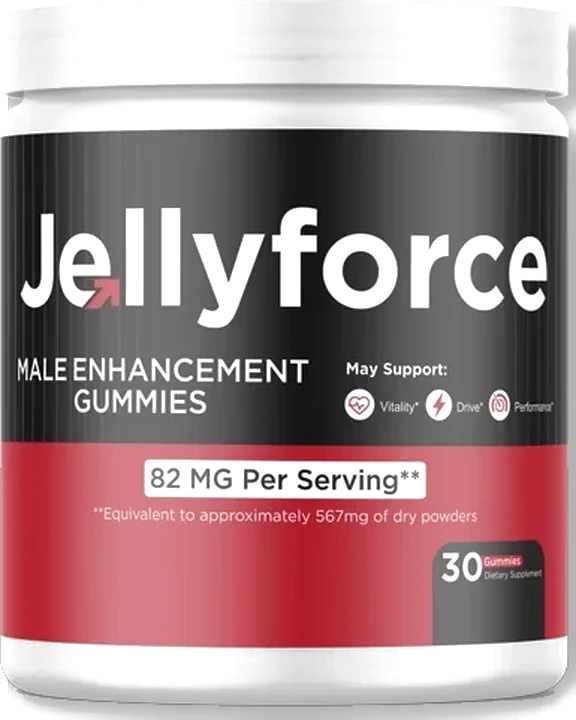
Jelly Force is a men's vitality gummy rather than a gut product. If that is what you came for, the official store is the only place we link to — current offer, shipping terms and the 60-day guarantee are shown there.
Get OfferReferences
- NCCIH — Probiotics: What You Need To Know
- NIH Office of Dietary Supplements — Probiotics fact sheet for health professionals
- PubMed — Cochrane systematic assessment: probiotics for preventing paediatric antibiotic-associated diarrhoea
- PubMed — Post-antibiotic gut mucosal microbiome reconstitution is impaired by probiotics
- Mayo Clinic — Are probiotics and prebiotics worth taking?